About me
Bookshop

Get new posts by email.

About me

On assisted dying

On Friday, the third reading of the Terminally Ill Adults (End of Life) Bill was passed in the House of Commons.


Assisted dying should, obviously, be legal. Ending one’s own life is not illegal, so it is bizarre that assisted dying is. This isn’t a restriction on death—it’s a restriction on autonomy. It prevents people who require assistance from doing something they are legally entitled to do. That is, to me, quite obviously wrong.

In a civilised society, we ought to strive to make legal activities accessible to all. We ought not to prevent disabled people from doing things the rest of us can.

Of course there need to be safeguards by the bucketload to prevent abuse—just as in myriad other areas where vulnerable people need assistance. But our starting point should always have been that we support those who, through disability or infirmity, are unable to carry out legal activities the rest of us can access.

It is morally reprehensible to hold people to a different legal standard on the basis of physical capacity.


The bill now moves to the House of Lords, where the Lords Spiritual will have their say: the 24 bishops appointed to our legislature by the Church of England. It is absurd that we have an upper house with more church-appointed clerics than doctors. It is unjustifiable that there are more bishops of a minority religion in the Lords than people under the age of 45.

In a secular, multicultural society, it is ethically indefensible to distort the debate by handing structural power over scrutiny of this legislation to a narrow theological bloc. Ethics and theology are not the same thing—especially in a society as plural as ours. We ought not pretend that a group which only began admitting women in the last decade has any kind of ethical authority relevant to the modern world.

Look: we’re handing 24 unelected bishops an automatic vote on how we die. Tell me your legislature’s a basket case without telling me your legislature’s a basket case.


And yet: bishops having a say makes more sense than assisted dying being framed as a medical issue. It’s not, it never should have been, and no one benefits from pretending otherwise.

Death is a spiritual, familial, social and, for some, religious event. It’s only the bizarre and persistent myth that death is a kind of medical failure that has pushed it out of sight and, all too often, into hospitals. Decisions about death ought not to be based on clinical prognostications—they are moral and existential choices.

Of course, doctors have a role. But that doesn’t make death a medical issue any more than it makes flying a plane a medical issue. A medical opinion may inform whether someone is fit to be in the cockpit, but a million other factors decide when and where the plane is headed.

Death is natural and expected. It comes to us all and concerns us all. It is one of the few unavoidable truths that touches and unites every human being on the planet. The idea that doctors are uniquely significant gatekeepers to end-of-life decisions is misguided and offensive—and I say that as a doctor.


Of course assisted dying should be legal. But I’m not nearly smart enough to know how it should work, or how to implement sufficient safeguards to prevent abuse. I do know I wouldn’t ask bishops or doctors—just as I wouldn’t ask them to design systems to safeguard against abuse in financial transactions, legal dealings, or any other domain where care and access must be balanced. I would look to other countries who seem to have made more sound progress with these issues.


Of course assisted dying should be legal. And I hope there are people smarter than me who can make it work.


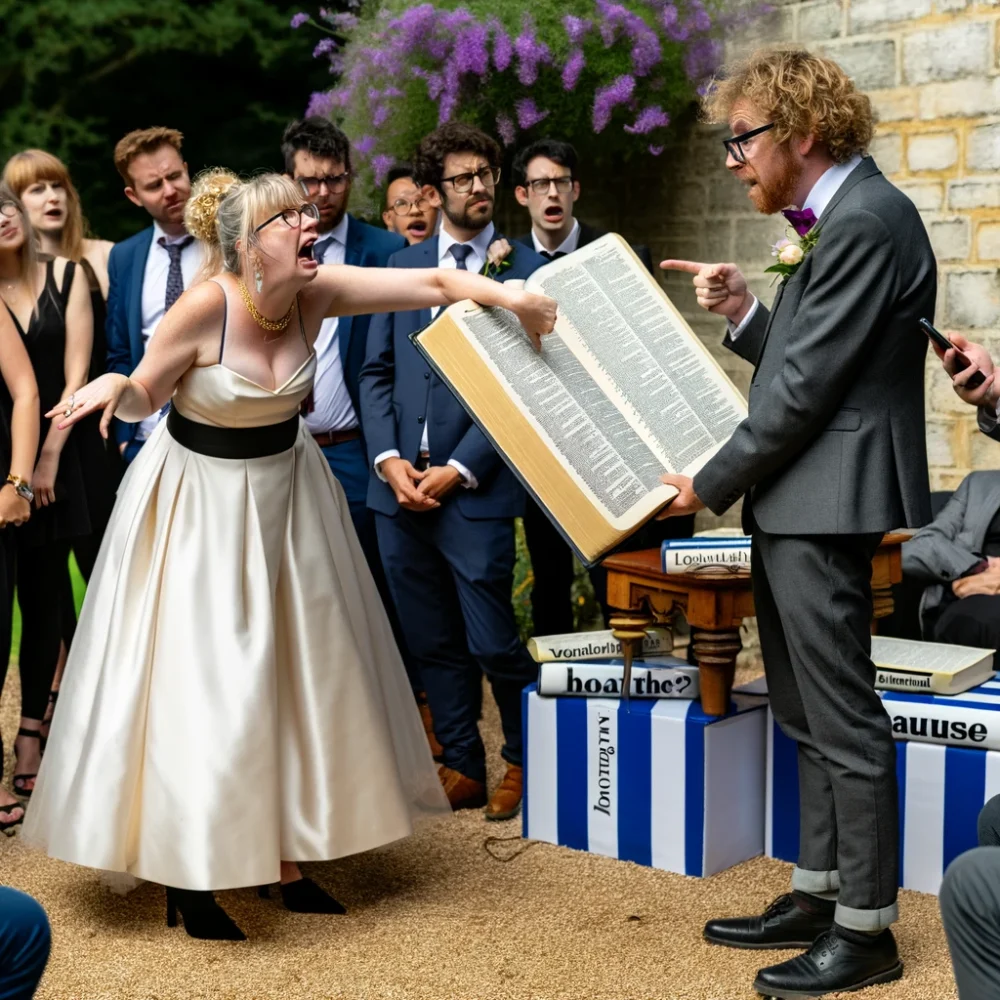
The image at the top was created with GPT-4o.

This post was filed under: Health.

The news is airing lies

In The Atlantic this week, Casey Newton writes:

One hallmark of our current moment is that when an event happens, there is little collective agreement on even basic facts. This, despite there being more documentary evidence than ever before in history: Information is abundant, yet consensus is elusive.

He’s referring to the USA. I don’t think we’re quite that far down this dark road in the UK yet, but it’s clear we’ve taken the same turning.

Lately, I’ve been increasingly irritated by the willingness of the news—and, it must be said, especially television news—to broadcast liars lying. You may mutter “’twas ever thus”, but I’m afraid I must disagree. Over the past six months, it has got considerably worse.

Tune into BBC News or Sky News—or any of their UK competitors—on most evenings, and you’ll see them take prolonged live coverage of Donald Trump. Inevitably, because it is what he does, Trump will lie during those segments. Not misleading spin. Not reasonable interpretations of contested facts. Lies. Simple, plain, incontrovertible falsehoods: that the January 6 rioters had no guns; that Ukraine started the war with Russia; that the US is the only country with birthright citizenship; that he coined the word “caravan”; that Canada prohibits US banks; that he had invaded Los Angeles.

These statements air uncontested. There is rarely even an acknowledgment that they may be disputed. They are simply allowed to play out. It is literally the case that Sky News has repeatedly broadcast someone stating—as uncontested fact—that the 2020 election was rigged. That is not journalism, and it is not acceptable. There should be a reasonable expectation that things broadcast on news programmes ought to be true.

But the problem is deeper than that. Watching the BBC’s coverage of the local elections last month, I think I was even more tired than Laura Kuenssberg was of her lengthy, pre-written ‘fact check’ every time someone mentioned the financial ‘black hole’. The point—as we’ve seen time and again—is that allowing people to repeat the lie lodges it in people’s minds, regardless of the correction. So, even when there is a correction, it’s often ineffective.

We in the UK ought to be insulated against a failure to agree on basic facts because of the existence of the BBC: an unbiased source of quality journalism; a publicly funded bastion of information, education, and entertainment.

And yet: our population believes that 21% of the country is Muslim (the real figure is 6%); that 51% of wealth is held by the richest 1% (the real figure is 21%); that more than a quarter of the population was born abroad (the real figure is 14%).

The BBC is operating on assumptions that no longer hold true. The idea that we allow politicians and others the freedom to speak on air is grounded in an old-fashioned idea of the “gentleman politician” whose statements are tethered to reality. That is no longer the world we live in. We need a different approach.

So, here’s a proposal: let’s make the BBC a bastion of factfulness. Make it responsible for improving the population’s understanding of the basic facts about life in the UK. Allow it to pursue that goal in whatever way it chooses—I’m no broadcast expert—but judge it on an independently measured outcome.

This would be good not just for the population, but for the BBC, too. We can stop arguing about whether the BBC should show programmes individuals personally dislike, because we can accept that to educate, it must reach. For the same reason, we can stop arguing about it branching out onto social media platforms. But it would also suddenly behoove the BBC not to mislead: to preserve the integrity of its airwaves, not try to backpedal after broadcasting lies, and certainly not allow lies to be aired unchecked.

This ought not to stifle public debate. I’m not suggesting that the BBC start policing the ‘truth’ of genuinely controversial ideas. I am, however, suggesting that we need to understand those competing visions in relation to a basic, agreed set of facts—and that we can test the audience’s understanding of those facts.

Of course, the reflexive rebuttal is: “but whose facts?” This is solvable: we’ve done it many times over, reaching consensus—however peculiar—on the content of the citizenship syllabus, for example. Once the ‘syllabus’ is agreed, measuring it is straightforward enough through population sampling.

And yes, the libertarian in me does find it a little dystopian to suggest that we should have a publicly funded organisation telling us what to believe… but it already exists, and we already assign it that role—we just don’t judge it by its outcomes, but rather bizarrely by its reach.

It’s clearly desirable that people understand the basic facts about the world they live in. We already cite the BBC as our greatest asset in achieving that outcome. So why not hold it to that promise—and make it the goal?


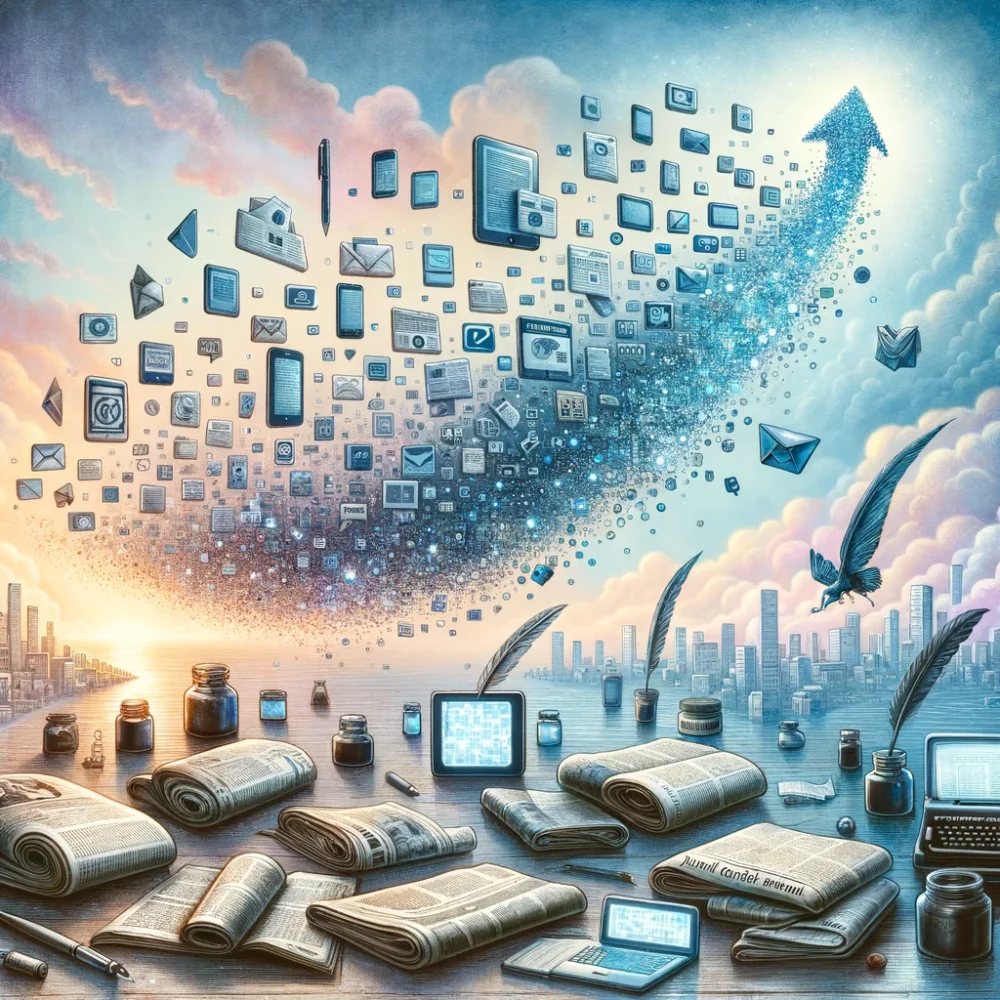
The image at the top was created with GPT-4o.

This post was filed under: Media, , , , , .

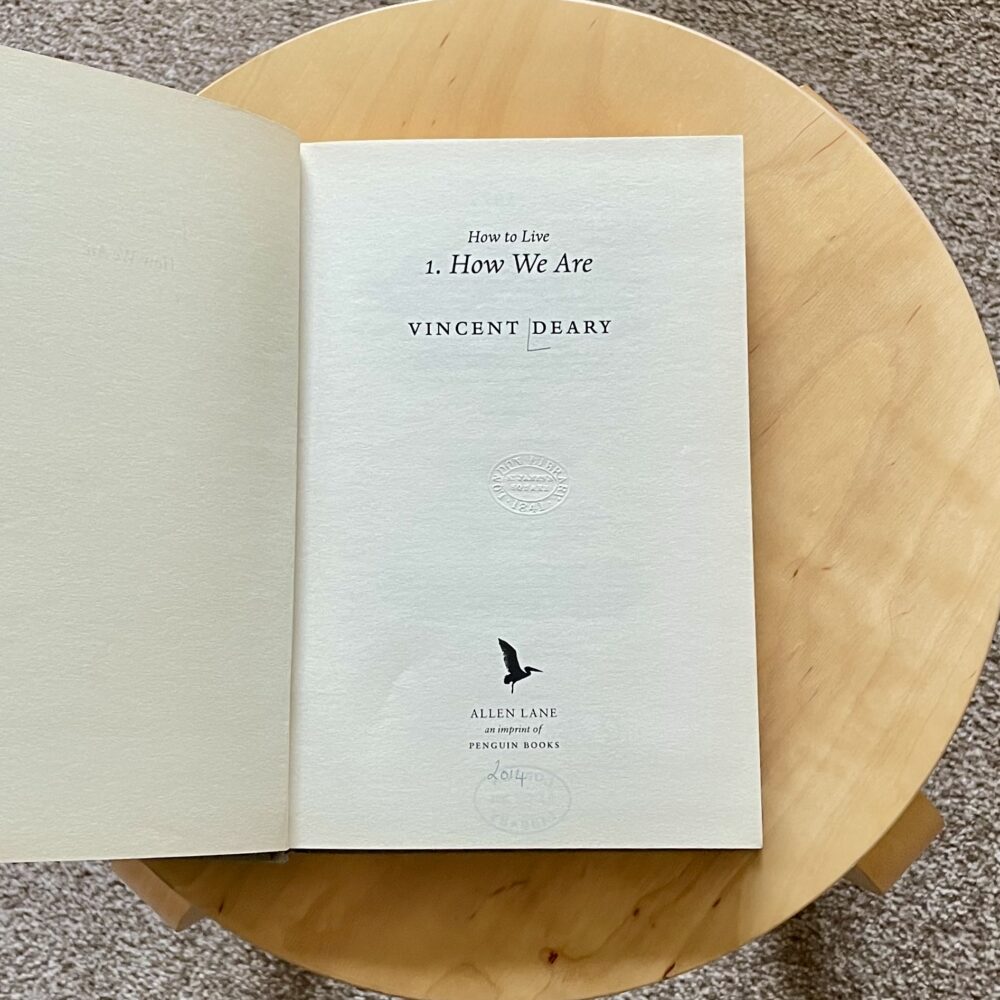
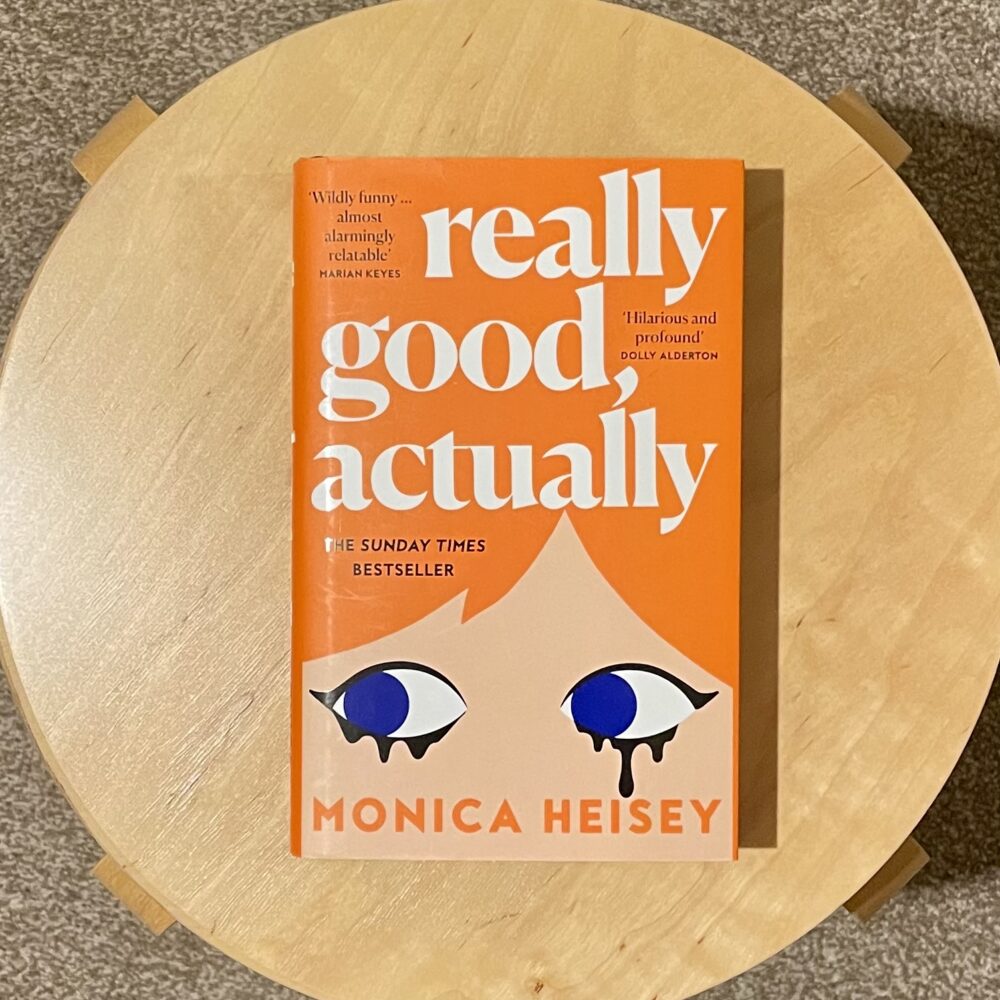
‘Perfection’ by Vincenzo Latronico

The first chapter of the Sophie Hughes translation of this book refers to

a black metal side table with past issues of Monocle and The New Yorker stacked beside a brass candleholder

I read this book, a birthday present from a friend, while sitting beside a black metal side table with past issues of Monocle and The New Yorker stacked beside a refillable glass jar candle. I felt seen.

Latronico’s slim novel is a sharp and quietly devastating satire of modern millennial life: the digital nomad, the curated flat white, the performative relocation to Lisbon, and the self-congratulatory minimalism of the internationally mobile. The prose is clean and deliberate, and the tone is coolly distant: we’re watching a couple build their life (or their content?) through the lens of aesthetic choices and geo-tagged escapism.

I read it in a single sitting and found it enormously enjoyable. It felt very much grounded in the present, a 2020s blend of irony, yearning, and careful lighting. Latronico skewers the way social media distorts not just the image we present, but the choices we make: what we eat, where we live, how we frame our success. The characters are less people than case studies, which feels exactly right. The distance allows room for commentary.

I particularly enjoyed this observation:

Differences of opinion that, online, were expressed in sarcastic retorts and subtweets would feel far less extreme in person. Somehow, value systems that seemed completely incompatible on social feeds could find a middle ground around a table at a café.

This is a novel about what we trade away in the pursuit of beauty and belonging. The aesthetic lives described here are not soothing; they’re brittle, polished to the point of falseness. Reading Perfection made me think of We Had to Remove This Post by Hanna Bervoets. Her book is very different in tone and setting, but is another short novel that explores the corrosive influence of online life on human connection.

If you’ve ever gasped as someone carefully crops a selfie to make their life look a little more like an ideal—only to see the flat sadness return the moment the camera’s away—this one’s for you.

This post was filed under: What I've Been Reading, , .

Linebreaks and wavebreaks

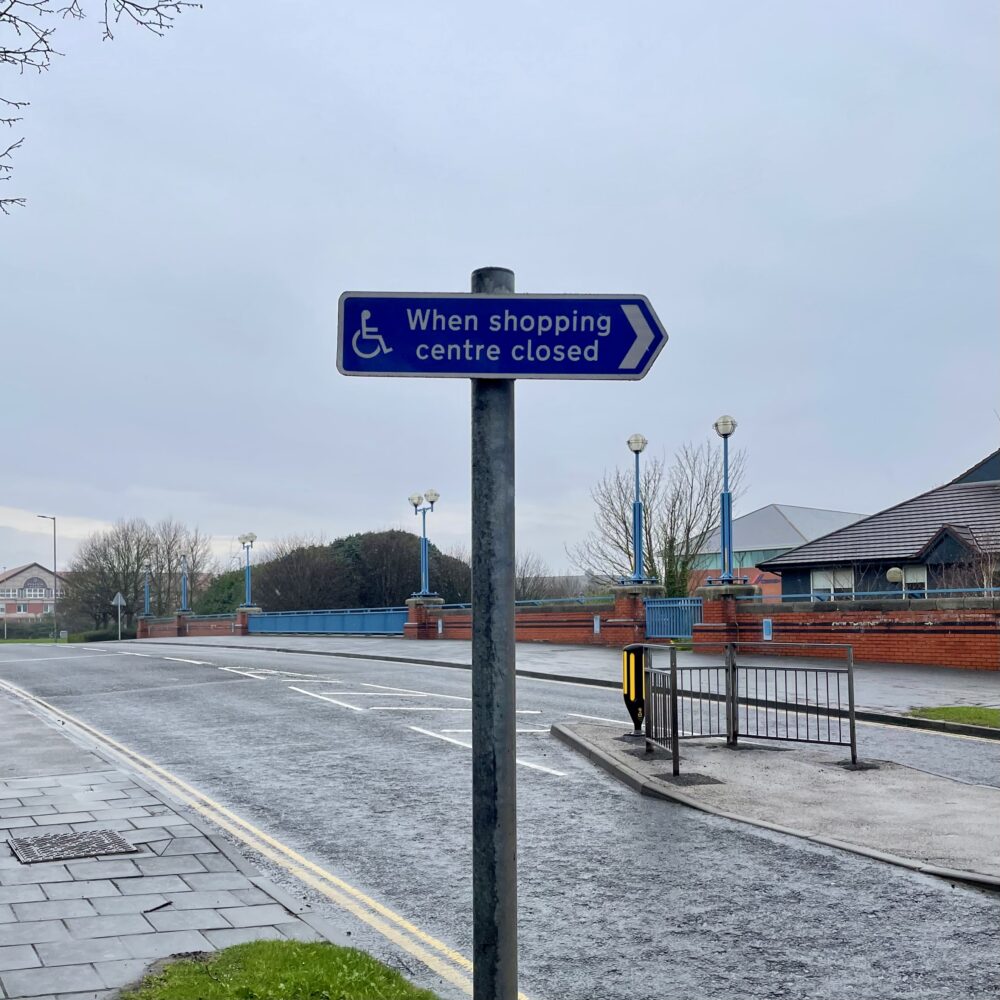
In medical school, Wendy and I were lectured by a paediatrician with a unique approach to slide design: he would very often use an inappropriately large font size, causing words to break across lines. Seeing the way ‘Hartlepool’ was written on the back of this boat gave me a little chuckle, borne of that shared memory.

This post was filed under: Photos, Travel, .

‘Fire’ by John Boyne

The third instalment of John Boyne’s Elements quartet, Fire, brings us the story of Freya, a character who played a minor role in Earth, now centre stage in a short novel that feels both more dramatic and more heightened than the previous two entries in the series—Water and Earth—both great. This isn’t a book grounded in gritty realism so much as one that leans into the operatic tone that Boyne often favours. And that’s not a complaint.

Freya is a plastic surgeon who treats burns victims. She also has a traumatic childhood and some very dark secrets in her adult life—though perhaps ‘secrets’ is too gentle a word for what unfolds. I didn’t find her especially believable as a character: she seemed more like a caricature of a cold-hearted young female surgeon than a person I could imagine meeting in the real world. If she was meant to be morally ambiguous, then that nuance didn’t land for me.

That might sound like a deal-breaker, but oddly, it wasn’t. Boyne’s writing is so propulsive and absorbing that I found myself tearing through the book regardless. It fits so neatly into the world established in Water and Earth that I didn’t mind the unreality of it.

The other two books felt like realistic explorations of the long-term effects of abuse; Fire felt like an exploration of that same topic, albeit filtered—at times—through Hollywood rather than reality.

I particularly enjoyed that characters from both earlier books turn up, which gives the whole project a pleasingly cohesive feel. It really feels like one novel in four parts, rather than four loosely connected short stories.

One character who stood out to me was Aaron, a medical student undertaking a three-month elective under Freya’s supervision. Unlike Freya, Aaron felt like a believable and relatable character. Despite Freya’s coldness and occasional cruelty, Aaron remains diligent and focused on his patients. His resilience and empathy provided a grounding presence in the narrative, and I ended up more invested in his journey than Freya’s. Interestingly, Aaron is set to be the protagonist of Air, the final book in the series, which has only heightened my anticipation.

Freya’s medical work, especially her treatment of burns patients, takes a backseat to the drama. It didn’t add much psychological depth, nor did it feel especially explored, though this may simply be a limitation of the novel’s short form. I found myself wondering whether readers outside of medicine might see more virtue in her profession and read that as a redeeming aspect of her character, which might have made this feel more real and less Hollywood: a bit of moral ambiguity goes a long way to creating a sense of reality.

I enjoyed Fire every bit as much as the earlier books, if not more, and I’m very much looking forward to seeing how Air brings everything together.

Boyne’s quartet is turning out to be a rather interesting experiment. He’s always been a writer more interested in character than plausibility, and the emotional through-lines of these books—abuse, identity, the gap between surface and reality—feel increasingly well-woven. I’ll be fascinated to see where it all lands.

This post was filed under: What I've Been Reading, .

Pride and prejudice

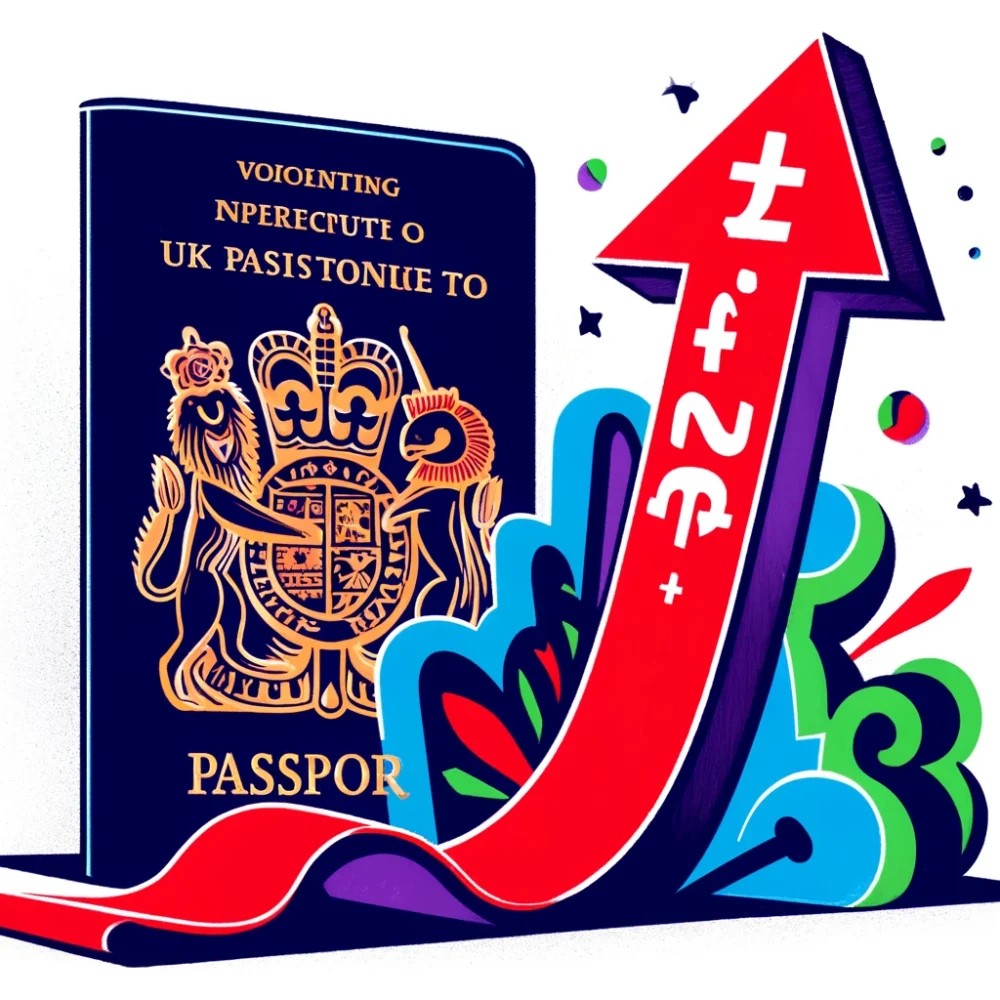
There’s a publication—I need not give them any more publicity by mentioning the name—that has billboards up at the moment bearing this slogan:

Since when did pride in your country become prejudice?

There are lots of definitions of pride: from morning mist to a group of lions, and from personal dignity to the height at which a falcon flies. But the billboard is clearly nodding toward the definition in Austen’s novel, so let’s answer the question on those terms.

In the novel, and particularly in Darcy, Austen draws a distinction between ‘sinful’ pride and ‘dignified’ pride. The former is a sense of arrogance and superiority—the kind of pride in wealth and social status that allows him to dismiss Elizabeth as ‘not handsome enough’ and give him the moral authority to ‘condescend’ to love her. This is pride as prejudice. As the Oxford English Dictionary would have it, ‘an excessively high opinion of one’s own worth or importance, which gives rise to an attitude of superiority over others.’ Not for nothing is it the first of the medieval deadly sins.

By the end of the novel, Darcy has learned some humility: his pride has become ‘dignified’. His pride is grounded in recognising his own innate self-worth and self-respect in a way that is shaped by moral insight, not social superiority. This is pride without prejudice, a recognition that one’s own personal dignity need not denigrate the worth of others. Or, as the Oxford English Dictionary puts it, ‘self-respect; self-esteem of a legitimate or healthy kind or degree.’

At heart, it’s a distinction between sinful, comparative pride—rooted in a sense of superiority over others—and dignified, inward pride, grounded in one’s moral character.

Since a ‘country’ is, by definition, built on borders—on who is ‘in’ and who is ‘out’, on who counts as ‘citizen’ and who as ‘foreigner’—’pride in one’s country’ almost always carries an undertone of superiority. It is a prejudice: a pre-judgement that one’s own country is better than others. Compare the tone of most national pride rallies with most gay pride events—one is about exclusion, the other inclusion. One is about prejudice, the other personal dignity.

So, the answer to the exam question is that pride has been interwoven with prejudice for as long as the word has been around. The earliest dated example in the OED is from 1200 CE, so we can confidently answer the question: ‘longer than you think.’

The central message of Austen’s novel is that pride and prejudice are interwoven in ways that don’t serve people well. It takes a special kind of irony to reference Pride and Prejudice while proving its thesis in real time. But then, manufacturers of dog whistles tend to favour volume over clarity… as, perhaps, does the advertised publication.


The image at the top was created with GPT-4o.

This post was filed under: Miscellaneous, .

‘The Mussel Feast’ by Birgit Vanderbeke

This is a short, sharp little book, often taught in schools in Germany, but which I read in Jamie Bulloch’s English translation.

I read it in a couple of days, though I think it would have been better approached in a single sitting. It’s a single, breathless, unbroken monologue delivered by the daughter of a family, whose mother is preparing a mussel dinner to welcome home their father. It’s a claustrophobic and propulsive read. I just wanted to keep going, partly to escape the suffocating domestic atmosphere and partly to find out where on earth it’s all heading. It’s a quietly brilliant piece of narrative control.

Originally published in 1990, the novella has often been described as a veiled allegory of political tyranny, with the father figure as a stand-in for the East German state, or authoritarianism more broadly. But for me, with a less-than-perfect grasp of German history and reading it in the present cultural moment, I was struck more by how contemporary it feels as a portrait of toxic masculinity within a domestic setting. Less regime, more patriarchy.

The father dominates the entire book through sheer force of absence. And yet it’s the daughter’s voice, childlike and unreliable, that gives the story its emotional weight. There’s a touch of humour throughout, with little turns of phrase, slightly skewed logic, a child’s earnest interpretation of adult dynamics. It lightens what is, in essence, quite a dark and disturbing tale — yet that levity makes the darkness more acute. Is this all as grim as it seems, or is it the impression of a child with a flair for drama?

I felt a good deal of sympathy for the narrator. Her unreliability made her more relatable. I wanted to protect her, seeing what she can’t. That dynamic gives the novella an oddly tender quality, even as the plot edges ever closer to its strangely satisfying conclusion.

It’s not a book I expect to return to, but I’m glad I read it. I’d recommend it as a short palate cleanser, something to read in an afternoon that will stick in the mind longer than you expect. A neat little curiosity, with much more going on under the surface than first appears.

This post was filed under: What I've Been Reading, , .

Steetley Pier

This is Steetley Pier in Hartlepool. It was never a pleasure pier: it was constructed in the 1960s to pump saline seawater into the local magnesia works. Nevertheless, people—and particularly fishers—used to trespass on it. And so, when the works closed in 2005, the Council knocked down a section to prevent perambulation, leaving only an eye-catching, if slightly forlorn, landmark.

This post was filed under: Photos, Travel, .

‘Cosmicomics’ by Italo Calvino

There’s a particular part of my brain that only ever lights up when I read Calvino. I don’t know quite how he does it. The stories are often absurd, abstract and utterly unmoored from reality—and yet they always end up saying something simple and profound about what it means to be human. I suppose that’s the trick, isn’t it?

I stumbled across Cosmicomics more or less by accident: I hadn’t even realised there was a Calvino I hadn’t read. Penguin’s Little Clothbound Classics edition caught my eye, and I ended up reading it across a smattering of cafes, Metro journeys, and odd pockets of time. It’s a collection of short stories, each inspired by a scientific theory—most of which have since been disproven. But the facts are irrelevant. The stories are timeless.

In one, the moon is so close to Earth that people climb up to it on ladders and gather moon milk. In another, a generational culture clash is played out between an amphibian and his fishy uncle. In yet another, dinosaurs become mythical creatures whose presence haunts the collective imagination long after their actual threat has vanished. There’s even a story about a message that travels between planets over millions of years—a surprisingly prescient allegory for social media and the gnawing anxiety of being seen but not understood.

The stories sound bonkers. And they are. But they are also beautiful. There’s a real emotional clarity running through them—a sort of quiet, reflective core that anchors the whimsy. Calvino plays everything straight, and that’s part of what makes it work. If anyone else tried to write a story about a shy dinosaur feeling displaced in a post-dinosaur world, I’d probably scoff. But in Calvino’s hands, it becomes a meditation on trauma, resilience, and the shifting nature of memory. It reminded me of the way intense fears can linger long after the actual danger has passed. Over time, those feelings mellow and morph. Some traumas fade into something almost mythical: half-remembered, oddly unreal, occasionally even a little funny. Calvino captures that process perfectly.

The story Light Years, about delayed communication across space, struck a similar chord. It starts with a message—‘I saw you’—and unfolds into a deeply resonant exploration of guilt, miscommunication, and the irrelevance of context once enough time has passed. That gap between action and response, intention and perception, felt painfully familiar. It’s extraordinary how a story written in the 1960s can feel so bang on about our digital present.

If Calvino’s better-known work feels like fairy tales for grown-ups, Cosmicomics is something slightly different: more cosmological, more playfully abstract. And yet, it’s still unmistakably him. The whimsy. The philosophical undertow. The gentle humour and unshowy wisdom. It’s all there, just seen through the lens of space and time rather than gardens and cities.

The edition itself is a treat—a pocket-sized hardback in Penguin’s Little Clothbound Classics range, with the original William Weaver translation. It felt like an indulgent thing to hold and read, which added to the pleasure.

I’ve read too much Calvino to have any sensible opinion about whether this is a good place to start. But for me, it was a joy—amusing, moving, intellectually playful, and oddly comforting. Like all the best Calvino, it made me feel more human. And a little more okay with the fact that none of us really know what we’re doing.

This post was filed under: What I've Been Reading, .

‘Adolescence’ isn’t everything

There aren’t many areas of life where I agree with Kemi Badenoch—but, like her, I haven’t seen the Netflix series Adolescence. But I have seen, watched and listened to seemingly endless commentary about the dangers of boys being radicalised online by men with toxic views of masculinity… an issue which is hardly new, but which suddenly has a lot of cultural currency.

The tone has been broadly sympathetic: a chorus of concern, some hand-wringing, even a parliamentary debate. These boys, we’re told, are victims. Vulnerable. Impressionable. It could happen to anyone.

What’s striking is how rarely this is recognised as a familiar story.

Take the case of Shamima Begum. A British girl, groomed online as a teenager, who left the country at 15 to join ISIS. It’s the same story: a child radicalised online who goes on to take unwise actions. Yet her story is not seen as a cautionary tale, but as a scandal. Somehow, not a failure of safeguarding, but of loyalty. She wasn’t failed; she was treacherous. And so, she was stripped of citizenship and left stateless, as though none of this—her age, her vulnerability, the context—were relevant.

The contrast is hard to miss. When a fictional white boy is radicalised, it sparks a national conversation about prevention and empathy. When a real brown girl is radicalised, it becomes a question of punishment and blame. One is a victim; the other, a threat.

There is, of course, a racism to this. A gendered lens, too. But beyond that, there’s a practical cost to the inconsistency. Because when we fail to see the underlying similarities between different forms of radicalisation, we limit our ability to respond effectively to any of them.

The mechanisms—algorithmic echo chambers, the lure of certainty, the slow drip of ideology dressed up as empowerment—are the same for all forms of online radicalisation. It’s antivaxxers, it’s far-right conspiracists, it’s neighbourhood group chats convinced the local council has ‘gone woke’. It’s your parents claiming a local schoolchild identifies as a cat and is fed milk at school—it must be true, they saw it on Facebook.

The narratives may differ, but the structure is the same: beguiling lies which spread and manipulate people toward specific beliefs and actions.

Yet, our response too often focuses on the content rather than the common architecture. So much of the commentary around Adolescence has been focused myopically on online misogyny, and so many of the proposed solutions have been about building siloed strategies based on tackling that. We fail to see the core, underlying issues—not least because we insist on reducing some people to their ideology while elevating others above it.

In his particularly incisive podcast episode on Adolescence—the topic really is inescapable—Ryan Broderick suggests that the answer to all of this is love. If we’re really going to properly understand and tackle the problem of radicalisation, we need warmth, understanding and empathy, not just for certain groups of people who are affected by online radicalisation, but for all of them. If we can only muster empathy selectively—if we only see a radicalised child when they look like our own—we’ll never truly get to the root of the problem. We’ll just keep reacting to the symptoms that make the headlines, while the underlying conditions go untreated.

It’s not that the response to Adolescence is wrong. It’s that it reveals the limits of who we’re willing to care about. And when empathy is rationed, so is any real hope of solving the problem.


The image at the top was generated using GPT-4o.

This post was filed under: Media, Politics.


The content of this site is copyright protected by a Creative Commons License, with some rights reserved. All trademarks, images and logos remain the property of their respective owners. The accuracy of information on this site is in no way guaranteed. Opinions expressed are solely those of the author. No responsibility can be accepted for any loss or damage caused by reliance on the information provided by this site. Information about cookies and the handling of emails submitted for the 'new posts by email' service can be found in the privacy policy. This site uses affiliate links: if you buy something via a link on this site, I might get a small percentage in commission. Here's hoping.